


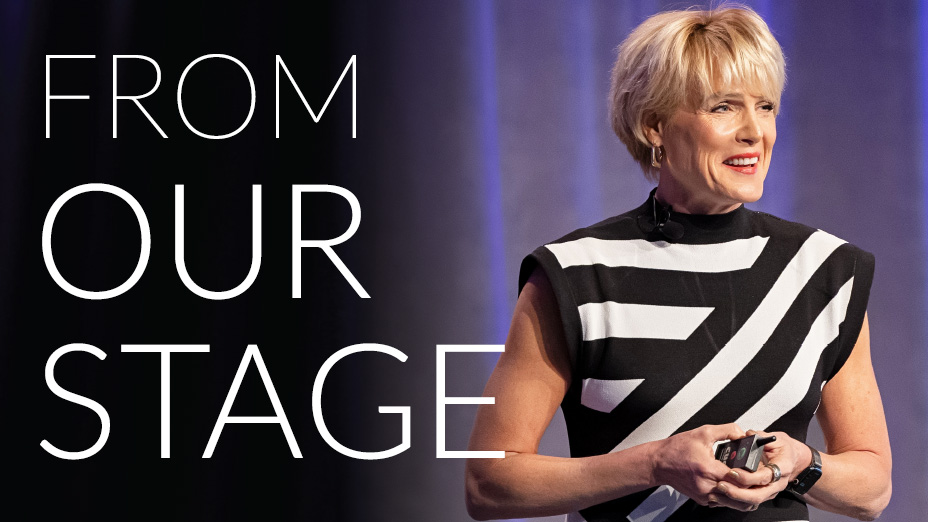
In a bold, insightful, and deeply relatable keynote, Caroline Adams Miller tackled a topic that often goes unspoken in professional circles: the complex relationships women have with each other in the workplace — and how these dynamics can either lift us up or hold us back.
Surround yourself with people who know your goals, encourage your growth, and aren’t afraid to hold you accountable.
Drawing on years of global research and personal experience, Caroline explored the quiet, often invisible ways women may diminish or exclude each other, especially when one of them steps into the spotlight. From subtle slights and withheld praise to silent treatment or exclusion from opportunities, these behaviours — often rooted in competition, cultural conditioning, or scarcity thinking — can undermine confidence, ambition, and performance.
Caroline introduced the idea of verbal jiujitsu, a term she uses to describe the subtle, socially acceptable ways girls and women are taught to express disapproval or envy, often without others noticing. Unlike overt conflict, this behaviour is hard to spot and even harder to name. Yet, for many women, its effects are lasting. Through powerful personal stories and examples, Caroline demonstrated how this behaviour reinforces a culture where women are hesitant to celebrate other women’s wins.
But her message wasn’t one of blame — it was one of hope and responsibility. She reminded the audience that this behaviour is not hardwired; it’s learned. And that means it can be unlearned.
Caroline offered real-world examples of what happens when women support each other’s success. From Olympic runner Shalane Flanagan, who invited her competitors to train with her — only to watch all of them rise together — to the all-women F1 Academy and historical figures who used their platforms to open doors for others, these stories offered a powerful counter-narrative.
“WHEN HER WIN IS YOUR WIN, AND YOUR WIN IS OUR WIN — THAT’S THE FUTURE OF LEADERSHIP.”
She coined a new word — ampliship — to describe what’s missing in so many organizations. It means publicly celebrating the ideas, wins, and leadership of other women. Not quietly or behind closed doors, but in front of witnesses. This public support not only reinforces confidence, it also normalizes a culture of recognition and collective progress. Caroline challenged attendees to adopt three key behaviours:
When women champion each other, everyone moves forward.
1. Practice Ampliship: Be visible in your support. Speak up in meetings, share accomplishments online, and call out great ideas so they aren’t overlooked. When a woman speaks up, make sure she’s heard. When she succeeds, be the first to cheer.
2. Commit to a MAI (Mastermind or Accountability Circle): Surround yourself with people who know your goals, encourage your growth, and aren’t afraid to hold you accountable. Whether it’s a formal group or a trusted inner circle, these relationships build what she calls relational grit — the courage to do hard things when you know you’re not doing them alone.
3. Celebrate Out Loud: Whether online or in-person, make a habit of sharing good news — not just your own, but others’ too. Visibility creates opportunity. Silence creates doubt.
Caroline closed by reminding us that leadership isn’t about fighting for one seat — it’s about building bigger tables. When women support one another openly and consistently, they don’t just rise individually — they elevate everyone around them. That, she affirmed, is the true art of leadership.



What Did You Think?